Planning to register your Private Limited Company? You're in trusted hands. At Chintan Agrawal & Co., we streamline the entire Pvt. Ltd. company registration process with expert guidance and complete online support. No paperwork hassles, no delays — just accurate filing and smooth execution handled by our experienced professionals.We take care of the registration, so you can focus on growing your business.Start your Private Limited Company journey with confidence — partner with Chintan Agrawal & Co. today.
A Private Limited Company is the most popular and trusted business structure in India. It offers limited liability, legal recognition, and improved funding opportunities—making it ideal for startups, SMEs, and growing enterprises.

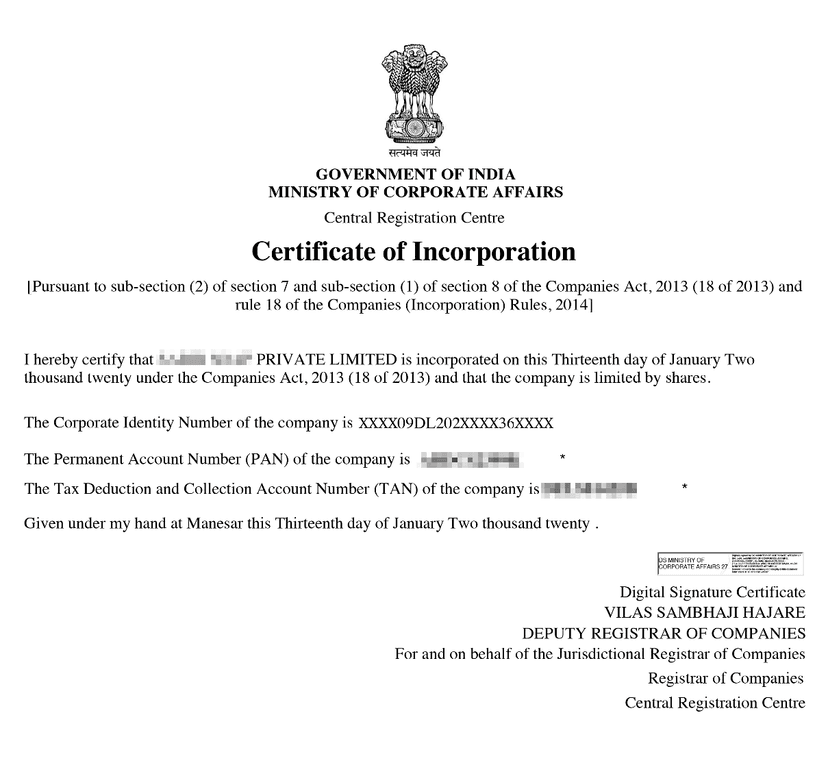
This is a sample of the official registration certificate issued by the Ministry of Corporate Affairs (MCA) upon successful incorporation of a Private Limited Company. It includes your Company Identification Number (CIN), date of incorporation, and is digitally signed by the Registrar of Companies.
This certificate serves as legal proof of your company’s existence and is essential for opening bank accounts, applying for licenses, and starting formal business operations.
Registering as a Private Limited Company offers several key benefits that make it a popular choice for entrepreneurs and business owners in India.
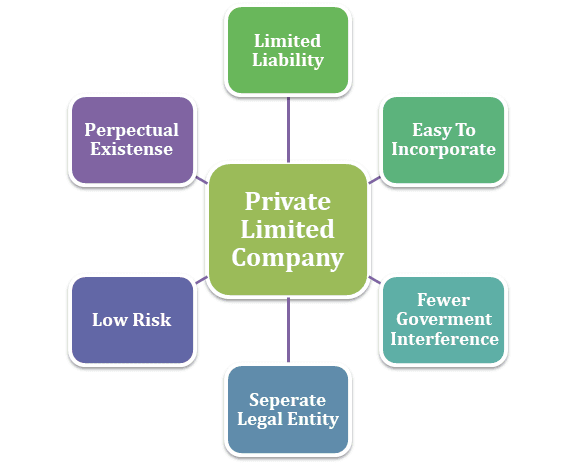
One of the most significant benefits of registering a Private Limited Company is limited liability. In case the company faces financial distress or lawsuits, the personal assets of the shareholders—such as homes, bank accounts, or vehicles—remain protected. The risk is limited only to the capital invested in the business.
Limited liability allows entrepreneurs to take business risks without the fear of losing personal wealth. This protection fosters innovation and strategic expansion, knowing that personal finances are legally separated from business liabilities.
Investors are more willing to contribute capital to a Private Limited Company because their exposure is capped at their investment amount. This makes it a more secure and attractive option for equity partnerships.
Limited Liability Protection: Shareholders are only liable for the amount they invest. Their personal assets are protected from company debts or legal claims, ensuring financial security for business owners.
Separate Legal Identity: A Private Limited Company is treated as a distinct legal entity under the Companies Act. It can own property, enter contracts, sue or be sued—independent of its directors or shareholders.
Enhanced Credibility & Trust: Private Limited Companies are registered under the Ministry of Corporate Affairs (MCA), which boosts their credibility with customers, vendors, lenders, and investors.
Ease of Raising Capital: Private Limited Companies can attract equity funding from venture capitalists, angel investors, or banks, making it easier to scale and grow the business.
Perpetual Succession: The company continues to exist despite any change in shareholders or directors. This continuity ensures long-term stability and easier business transition planning.
Transferability of Shares: Ownership can be transferred easily by selling shares, making it a flexible structure for future exits, investor onboarding, or expansion.
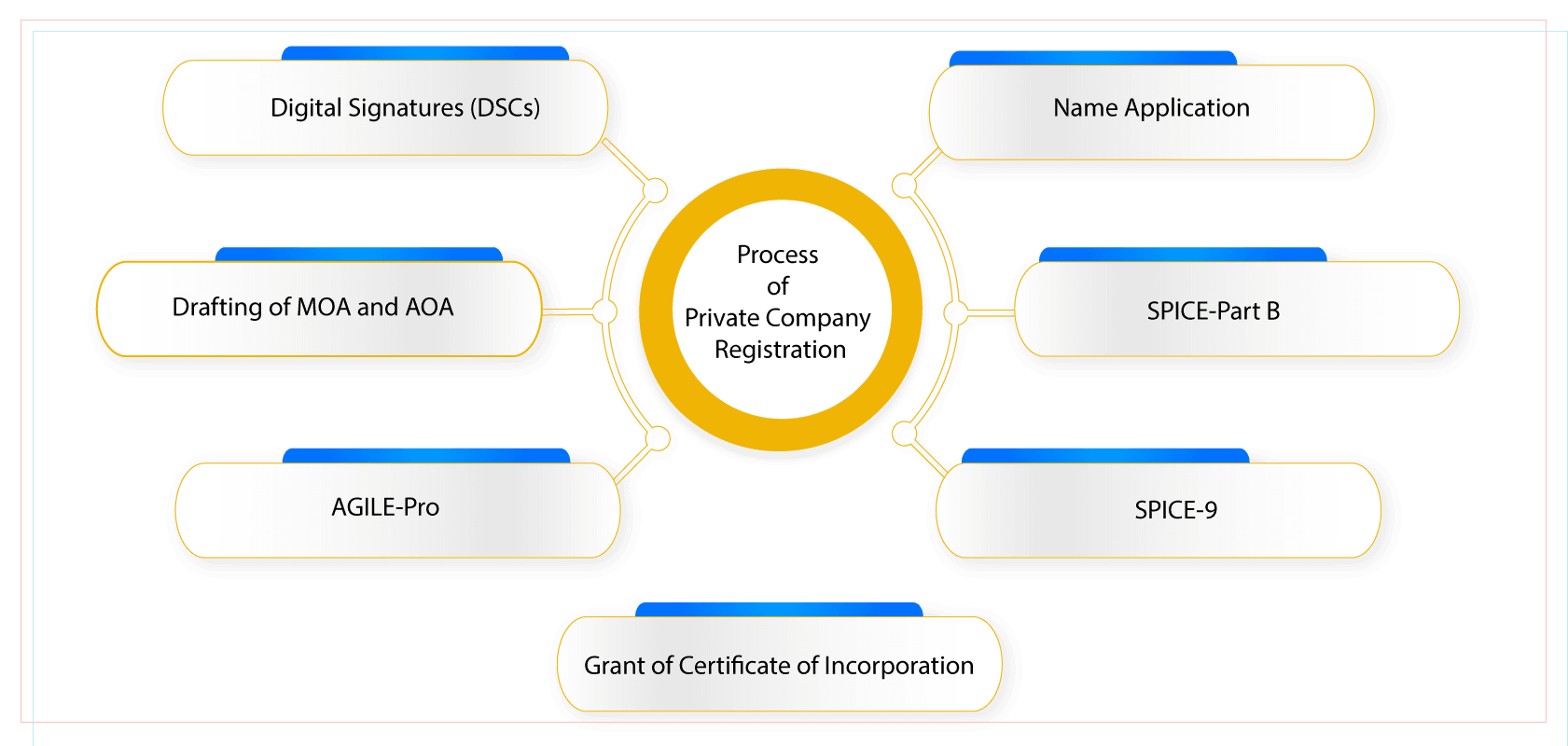
Select a unique name for your Private Limited Company and check availability with the MCA. Ensure it meets naming guidelines.
Apply for Digital Signature Certificates (DSC) for directors and obtain Director Identification Numbers (DIN) through the MCA portal.
Prepare and draft MOA (Memorandum of Association), AOA (Articles of Association), and other required incorporation documents.
Submit SPICe+ form along with required documents to MCA for registration. Includes PAN, TAN, EPFO, ESIC, and GST application.
Once approved by MCA, receive your Certificate of Incorporation along with Company PAN and TAN.
Open a bank account, issue share certificates, appoint auditor, and complete other legal formalities within 30 days.

PAN and Aadhaar cards of all directors for identity and address verification.
Utility bill (electricity/water) and NOC from property owner, not older than 2 months.
Memorandum and Articles of Association outlining business scope and internal rules.
Recent passport-size photos of all directors, typically in JPEG or PDF format.
DSC is mandatory for all proposed directors to digitally sign incorporation documents.
DIN is issued or linked during incorporation through the SPICe+ form filing.
If your business is in need of a trusted advisor, get in touch with us today.