Planning to start a business with a partner while minimizing personal risk? Register your Limited Liability Partnership (LLP) and enjoy the flexibility of a partnership with the protection of limited liability. At Chintan Agrawal & Co., we offer a streamlined LLP registration process—fully online, legally compliant, and backed by CA-led expertise. Whether you're launching a professional firm or a small business, our team handles documentation, MCA filing, and post-registration compliance so you can focus on your growth. Get your LLP registered today with Chintan Agrawal & Co.
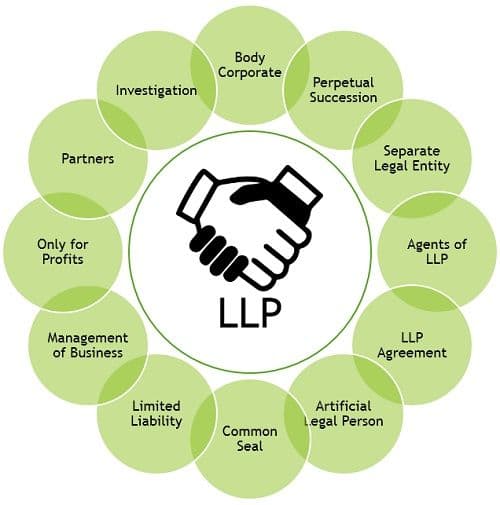
A Limited Liability Partnership (LLP) is a flexible and secure business structure that combines the advantages of a partnership with limited liability benefits. LLPs are ideal for startups, small businesses, and professionals seeking a low-compliance yet legally recognized business format.

LLP registration offers the perfect blend of flexibility and protection for professionals, consultants, and small businesses. It ensures limited liability, minimal compliance burden, and a separate legal identity—making it a smart alternative to traditional partnership or private limited companies.
In an LLP, partners are not personally liable for the debts of the business. Their risk is limited to the capital they invest. This provides peace of mind and financial safety in case of losses or legal claims.
Unlike traditional partnerships, LLP partners are not held responsible for the misconduct or negligence of other partners. This protects each partner individually.
LLP is a preferred structure for CA firms, legal consultancies, and startups seeking limited liability without complex compliance.
Limited Liability Protection: In an LLP, each partner's liability is limited to the amount they invest. Personal assets are protected from business debts, lawsuits, or losses, making it a safer structure than a traditional partnership.
Separate Legal Identity: An LLP is a distinct legal entity under the LLP Act, 2008. It can enter into contracts, own assets, and operate bank accounts in its own name—separate from its partners.
Reduced Compliance Burden: LLPs have fewer annual filing and meeting requirements compared to Private Limited Companies. This makes it easier and more cost-effective to manage ongoing legal and regulatory tasks.
Flexible Partnership Structure: LLPs allow flexibility in defining partner roles, responsibilities, and profit-sharing ratios through a customized LLP agreement. There's no upper limit on the number of partners.
No Minimum Capital Requirement: There is no mandatory minimum capital to start an LLP. You can begin operations with any amount of capital, giving entrepreneurs financial flexibility.
Credibility & Professional Recognition: Registration under the Ministry of Corporate Affairs (MCA) lends credibility to the LLP, making it easier to build trust with clients, vendors, and financial institutions.
Select a unique name for your LLP and check its availability with the Ministry of Corporate Affairs (MCA) through the RUN (Reserve Unique Name) service. Ensure it complies with LLP naming guidelines.
Apply for Digital Signature Certificates (DSC) for all designated partners and obtain Director Identification Numbers (DIN) if not already available. These are mandatory for online form submissions.
Fill and submit the Form FiLLiP (Form for Incorporation of Limited Liability Partnership) on the MCA portal. Attach required documents like ID/address proofs, photographs, and consent forms.
Once the Registrar approves your application, the Certificate of Incorporation is issued with the LLP Identification Number (LLPIN), officially recognizing your LLP.
Draft and file the LLP Agreement within 30 days of incorporation in Form 3. This agreement outlines the rights, duties, and profit-sharing ratios between partners.
Open a current bank account in the LLP’s name, apply for PAN and TAN (if not already included), and start your business operations legally.

Self-attested PAN and Aadhaar copies of all designated and general partners for identity and address verification.
Latest utility bill (electricity, gas, or water) not older than 2 months, along with a No Objection Certificate (NOC) from the property owner.
A draft agreement outlining roles, responsibilities, profit-sharing ratio, and terms of partnership between partners.
Recent passport-size photographs of all partners in JPEG or PDF format for KYC verification.
Each designated partner must obtain a DSC to digitally sign the incorporation forms and compliance filings.
Consent to act as designated partner (Form 9) and subscriber’s sheet signed by all partners with relevant details.
If your business is in need of a trusted advisor, get in touch with us today.